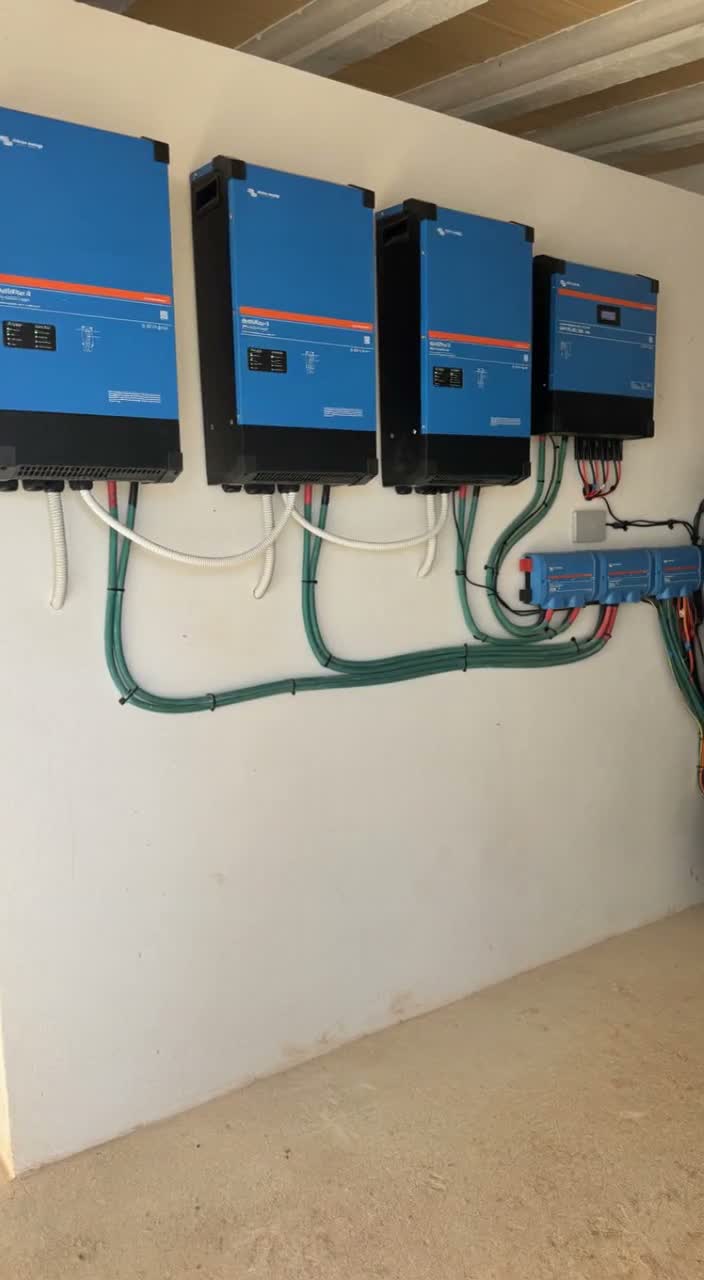
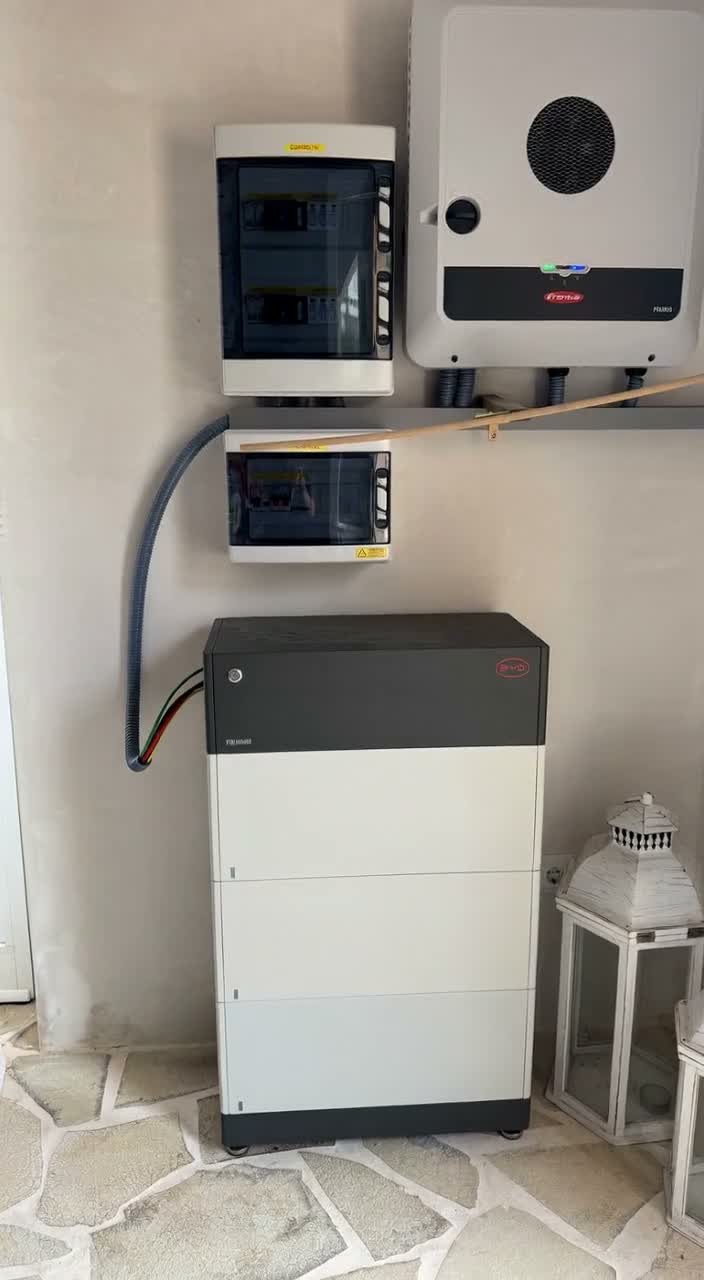
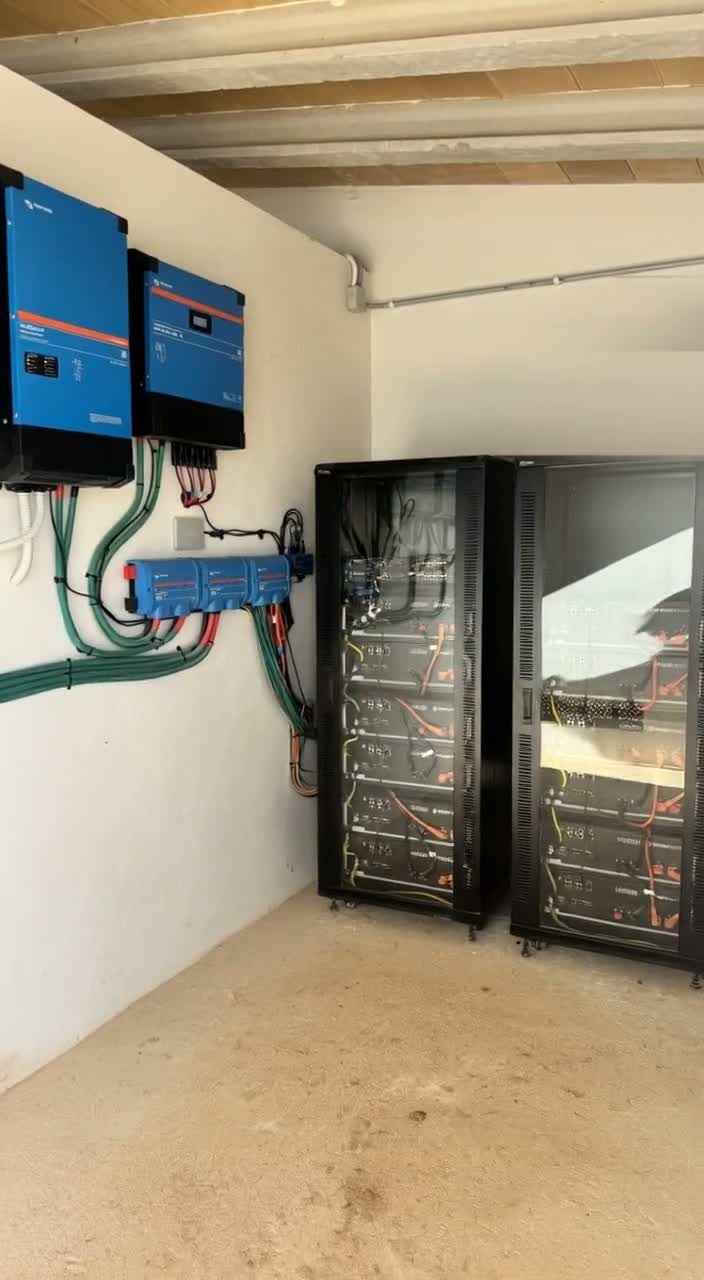
The inverter is the brain of the system
The panels produce direct current and your house runs on alternating current: the inverter handles that conversion and, more importantly, decides where every watt goes at any moment. First to the house's own consumption, then to charging the battery, and only then to the grid. We work with Fronius and GoodWe inverters and Victron Energy chargers — equipment with real spares and support behind it, not brands that vanish when you need a part.
LiFePO4 lithium: why this chemistry
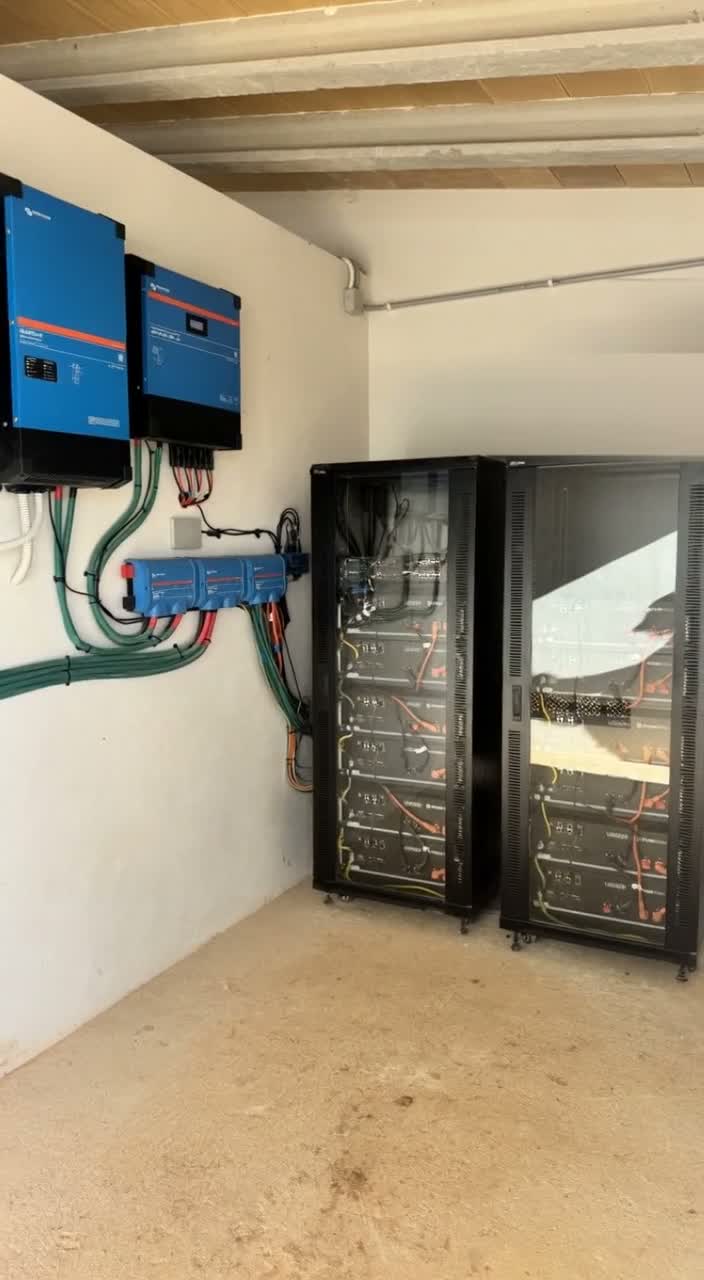
The batteries we install are lithium iron phosphate, the most stable lithium chemistry and the one that copes best with a Mallorcan summer. BYD and GoodWe both describe it in their datasheets as cobalt-free, precisely for safety. Cycle life and warranty years are set by each manufacturer in its own datasheet: we hand you that in writing with the quote rather than quoting a round number at you. The battery is sized against your real consumption curve, not a round number: an oversized battery never fills and an undersized one leaves you short in the middle of the night.
DC and AC protection
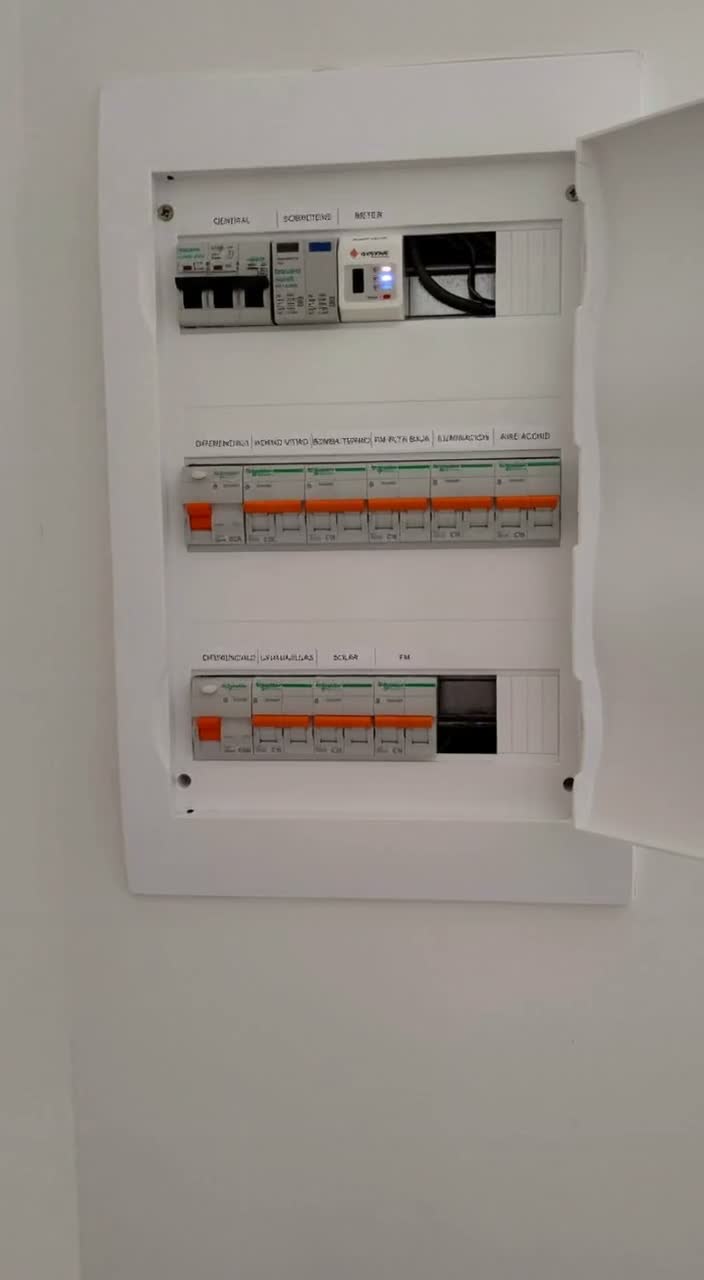
The cabinet carries its standard protective devices on both the DC and the AC side, with accessible isolation. It is the part nobody looks at and the one that really matters: a solar array keeps generating voltage as long as there is daylight, and the whole system has to be capable of being isolated safely for any later work, whoever carries it out.
An electrical installation, properly certified
Inverters, batteries and protective devices are a low-voltage electrical installation: carried out and certified by a licensed low-voltage installer, with its electrical installation certificate. Monitoring is set up so you can see on your phone what you are producing, what you are using and what you have stored. Statutory three-year guarantee (arts. 115 quater and 120 TRLGDCU) plus the manufacturer warranty.